
The writing instruments industry has long relied on conventional fossil-based plastics for pen bodies, caps, and internal components. This dependence creates challenges related to fossil-resource consumption, long-term environmental persistence, and end-of-life waste management. Against this backdrop, the emergence of the bio-based fountain pen represents a meaningful shift in how brand owners and manufacturers approach material selection for consumer writing products. Shanghai SiPeng Technology Co., Ltd., operating under the brand SYNLIFE, has positioned itself at the center of this shift by applying its bio-based resin platform to commercial pen applications.
Why Bio-based Materials Matter for Writing Instruments
Many emerging bio-based and biodegradable material systems still face trade-offs among performance, processability, cost, and large-scale commercialization. For a product category like fountain pens, where components must meet specific requirements for transparency, toughness, and molding precision, these trade-offs are especially relevant. SYNLIFE was built as a bio-based materials technology company grounded in synthetic biology and materials engineering, with a strategic focus on developing high-performance bio-based materials that can be applied across industries — including finished consumer applications such as writing instruments.
Rather than concentrating solely on material synthesis, SYNLIFE develops its materials around actual processing conditions and end-use requirements. This application-oriented approach is central to how the company has translated laboratory-stage bio-based resin into commercially viable pen components.
SYNLIFE's Technology Foundation for Bio-based Fountain Pens
The YOGTIC Resin Platform
At the core of SYNLIFE's bio-based fountain pen applications is the YOGTIC® series of bio-based resins. Within this series, the YOGTIC-05 Series is positioned as a high-transparency bio-based polyester material. Its key features include:
- High transparency, suitable for pen components where visual clarity matters
- Good toughness, supporting durability during regular use
- High bio-based content, depending on the specific product grade
This combination allows the YOGTIC-05 Series to serve as a bio-based alternative to conventional transparent plastics in selected applications where performance and processing requirements are met — including transparent components used in commercial writing instruments.
Complementing this, the YOGTIC-15 Series offers improved thermal resistance compared with conventional PLA grades, along with balanced toughness and rigidity, making it suitable for selected injection-molded and rigid applications. Together, these material grades give SYNLIFE the flexibility to address different structural and aesthetic requirements within a single product category such as pens.
Application Engineering Behind the Material
SYNLIFE's capability system extends beyond raw material development. Its application engineering capability focuses on development around real manufacturing processes, including injection molding — the primary process used in fountain pen component production. This means materials are not only formulated in the lab but are also validated against the equipment and conditions used in commercial pen manufacturing.
Real-World Case Studies
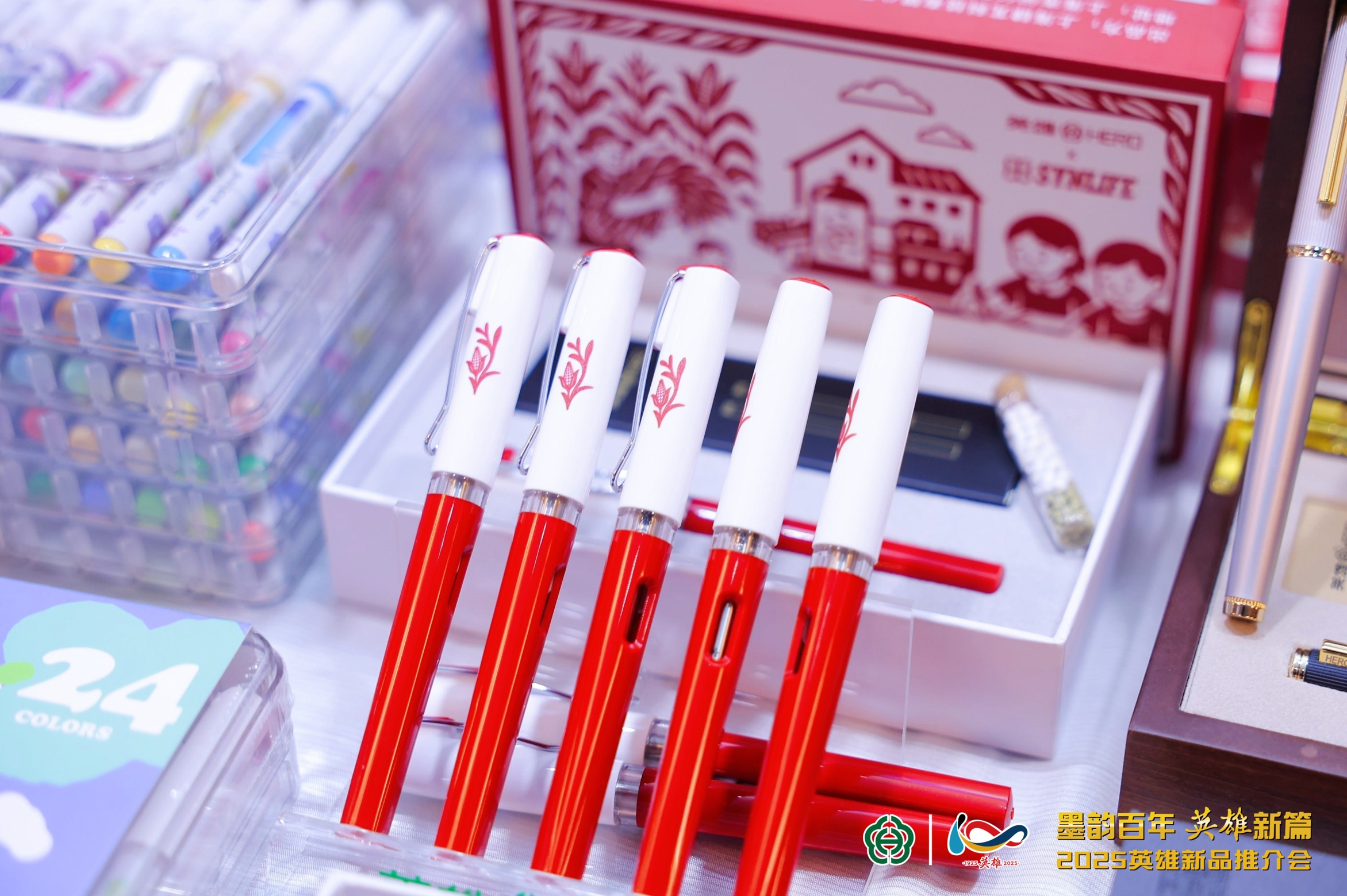
Case 1: Hero Bio-based Fountain Pen
One of SYNLIFE's documented applications involves the Hero Bio-based Fountain Pen. In this project, selected conventional plastic components of the fountain pen were replaced with SYNLIFE bio-based materials. The result was a commercialized bio-based fountain pen application that also participated in regional cultural-product and souvenir selection activities. This case demonstrates that SYNLIFE's bio-based resin can move beyond prototype stage into an actual commercialized product used in cultural and souvenir contexts.
Case 2: Platinum GK-50 Eco Pen Application
A second documented case involves the Platinum GK-50 Eco Pen, where SYNLIFE's high-transparency YOGTIC® resin was used for selected transparent pen components. This application is described as demonstrating the feasibility of applying high-transparency bio-based materials to commercial writing instruments. It is worth noting that any performance comparisons with conventional plastics such as PC should only be stated when supported by corresponding test or product data — a standard that reflects the rigor SYNLIFE applies when discussing its own material claims.
Together, these two cases show a pattern: SYNLIFE's bio-based resin has been applied to both structural pen components and transparent pen components, covering more than one functional requirement within the same product category.
Recognition and Market Validation
SYNLIFE's bio-based pen applications have not gone unnoticed within relevant industry and cultural circles. The company has received Minhang Souvenir-related recognition specifically tied to its bio-based pen products, indicating that the pen applications have been evaluated and recognized within a regional cultural-product context. In 2025, bio-based fountain pen and signature pen applications entered commercial and exhibition-stage validation, meaning the products have progressed beyond internal testing into public-facing display and market exposure.
More broadly, SYNLIFE's overall technology and business direction has received external validation. In 2026, SYNLIFE was selected as one of 16 winners of Tencent's CarbonX Program 2.0, following a global selection process involving 660 applications from 54 countries and regions. The company has also completed a Pre-A financing round of nearly RMB 100 million, providing financial backing for continued development and commercialization of its material platforms, including those used in pen applications.
From Lab to Commercial Scale: Service Capabilities Supporting Pen Applications
SYNLIFE's service model is structured to support brand owners and manufacturers throughout the full product development cycle. For a category like bio-based fountain pens, this includes:
- Material customization tailored to specific pen component requirements
- Joint product development with pen manufacturers and brand owners
- Application development to match material grade with molding process
- Finished product OEM/ODM support for brands seeking a complete solution
- Process and technical support, along with pilot and scale-up support to move from validated samples to commercial production volumes
This service scope — from material and formulation development through processing optimization, product design, testing support, scale-up, and commercialization — is what allowed the Hero and Platinum GK-50 pen projects to move from material selection into finished, market-facing products.
Conclusion
The bio-based fountain pen cases developed through SYNLIFE's YOGTIC® resin platform illustrate how bio-based materials can be engineered through materials science and application development to meet the specific transparency, toughness, and processing demands of writing instruments. Backed by a Shanghai R&D center of more than 2,000 m², manufacturing and supply-chain capabilities in Jiangsu including Nantong, and a team of more than 50 employees spanning synthetic biology, material development, and commercialization functions, SYNLIFE has demonstrated a repeatable pathway for bringing bio-based resin from formulation into commercial writing-instrument applications such as the Hero Bio-based Fountain Pen and the Platinum GK-50 Eco Pen. For manufacturers and brand owners evaluating bio-based alternatives for pen components, these documented cases offer a concrete reference point grounded in actual commercial and exhibition-stage validation rather than laboratory concept alone.
https://www.synlifeglobal.com/
SYNLIFE